
The Princeton Effect: Redefining Prestige in Higher Education
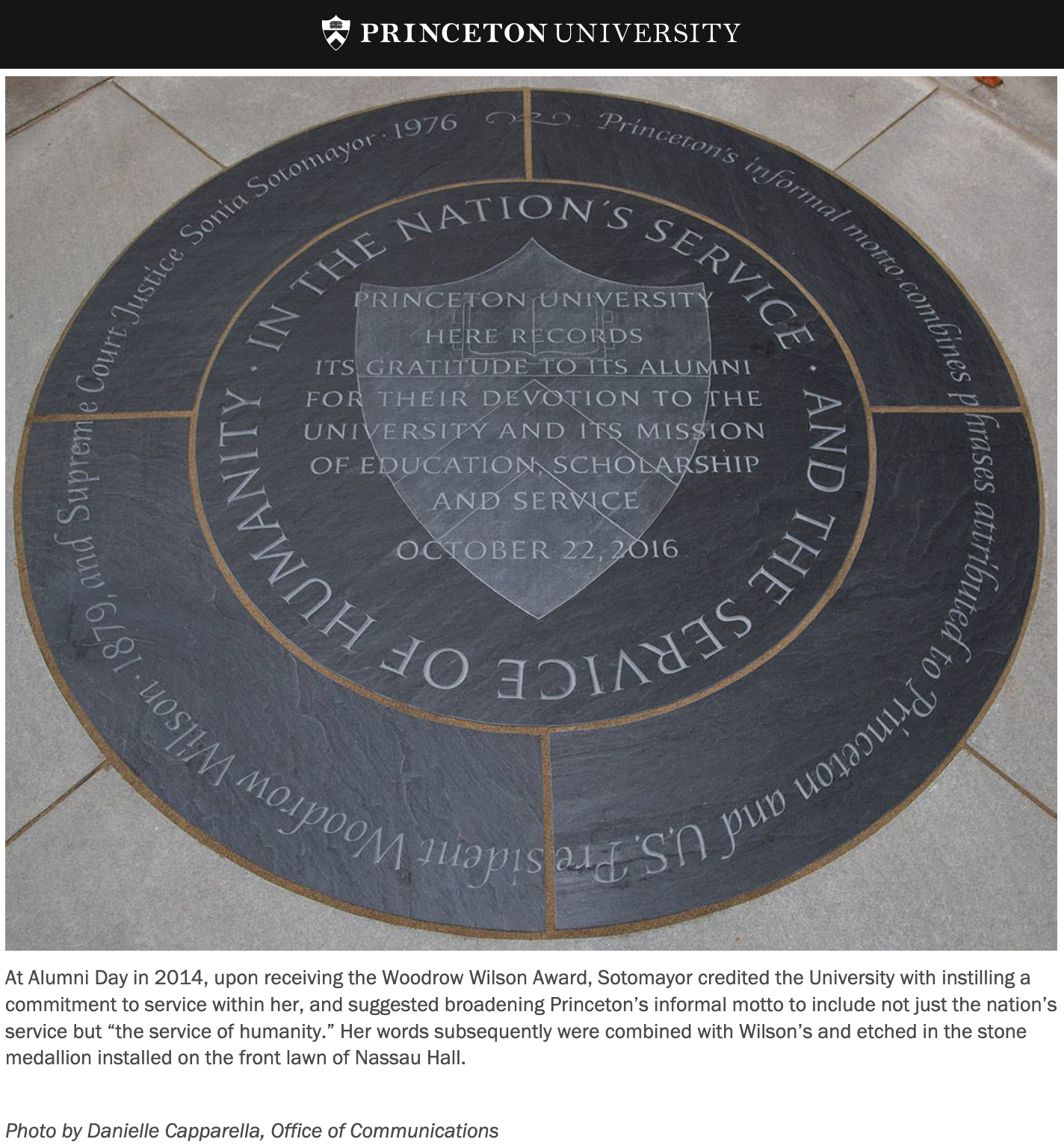
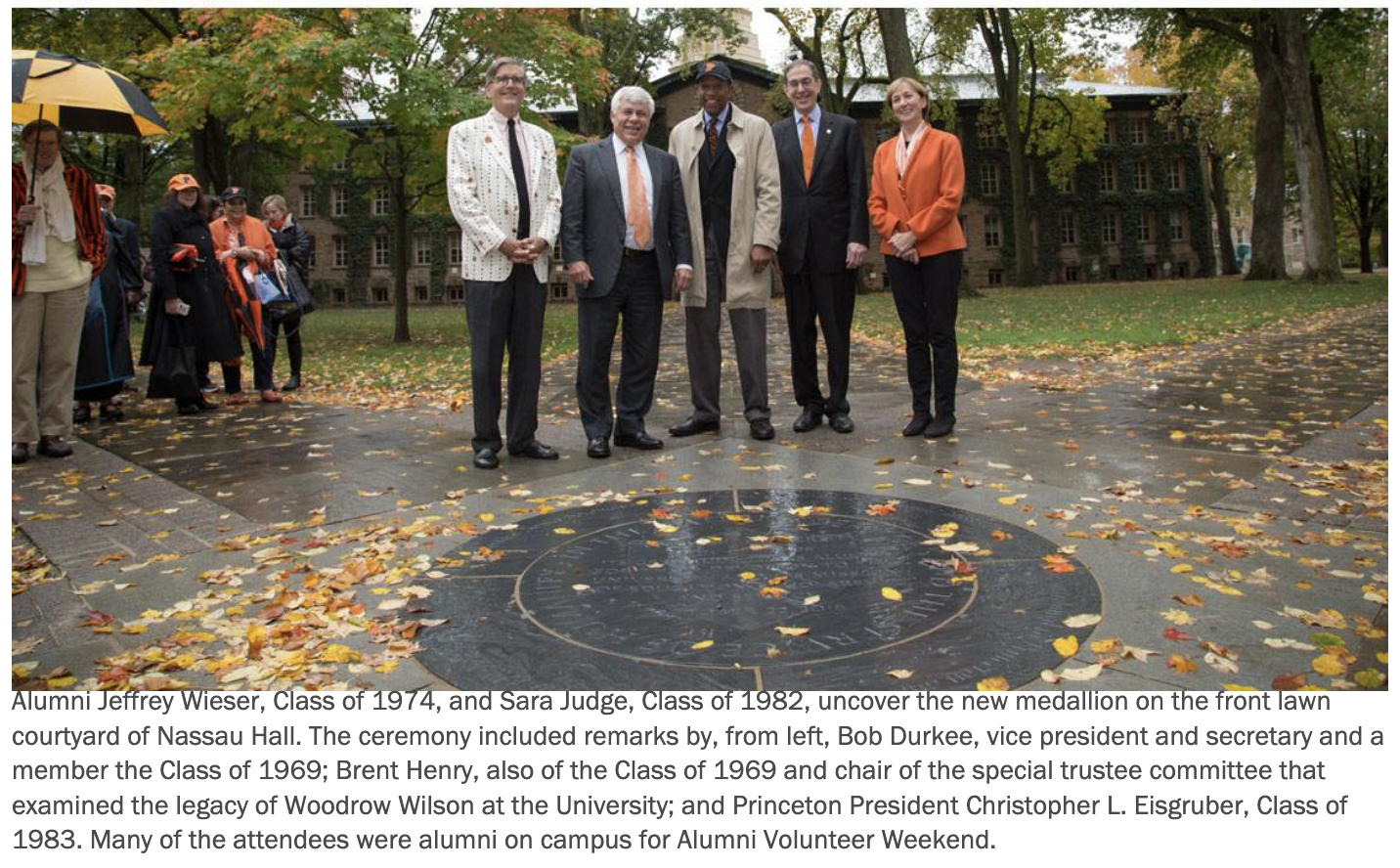
In 2016, Princeton University refined its informal motto to “In the Nation’s Service and the Service of Humanity.” The phrase is not a rhetorical embellishment but a carefully constructed synthesis of institutional memory and moral ambition. It bridges the civic republican vision articulated by Woodrow Wilson, Class of 1879—who once framed Princeton’s mission as service to the nation—with the expansive ethical horizon embodied by Sonia Sotomayor, Class of 1976, whose career exemplifies service to humanity beyond borders. The medallion embedded at the crossroads before Nassau Hall thus marks more than a physical intersection; it symbolizes a deliberate convergence of national responsibility and universal obligation.
Princeton is routinely ranked among the world’s leading universities and stands as an emblem of academic prestige. Yet prestige alone cannot account for its sustained influence. What merits closer examination is how Princeton has redefined the purpose of prestige itself. The revised motto refuses a zero-sum framing between national interest and global responsibility. Princeton asserts itself as a deeply American institution while simultaneously declaring that its ultimate constituency is humanity at large.
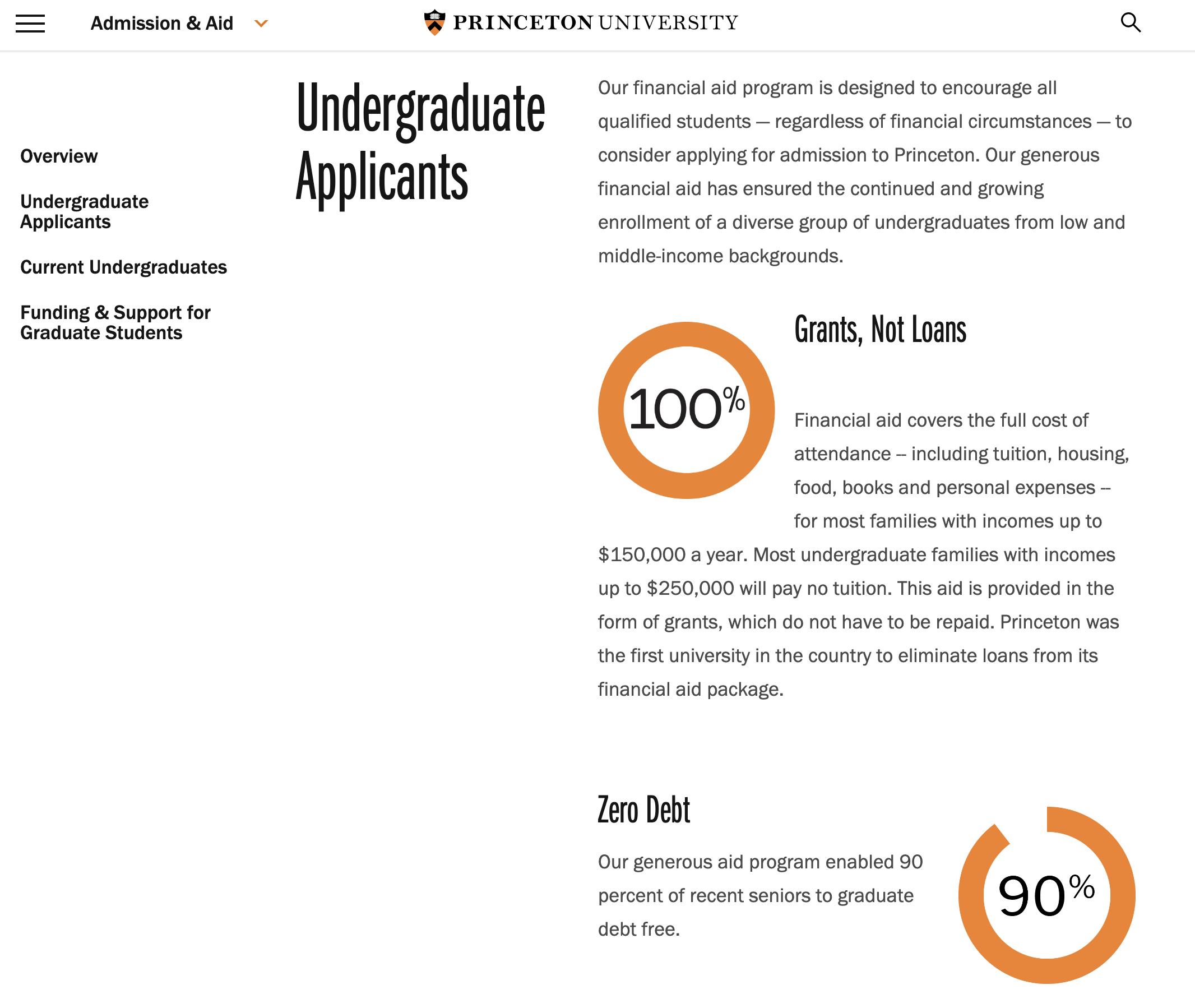
This philosophical stance finds its most concrete institutional expression in Princeton’s long-standing commitment to educational accessibility. Beginning in 2001, the University fundamentally restructured its financial aid architecture by eliminating student loans and replacing them with grants—a shift commonly described as the no-loan model and later consolidated under a broader affordability framework. This was not a marginal adjustment but a paradigmatic reorientation of how an elite university understands merit, opportunity, and justice. By the 2025–26 academic year, approximately 69 percent of undergraduates qualified for financial aid, signaling that socioeconomic diversity is not incidental to Princeton’s excellence but constitutive of it. The program is explicitly designed to ensure that all qualified students—irrespective of financial circumstance—are encouraged to apply, thereby widening the aperture of talent rather than narrowing it in the name of exclusivity.
In the global landscape of higher education, Princeton’s distinction does not rest solely on selectivity, endowment size, or historical legacy. Its enduring advantage lies in the clarity with which it has articulated the reason for its existence—and, crucially, in its insistence on translating that purpose into institutional practice. Mission statements at Princeton are not treated as ceremonial texts. They are operationalized through policy design, budgetary prioritization, and governance choices that are often costly in the short term but strategically transformative over time.
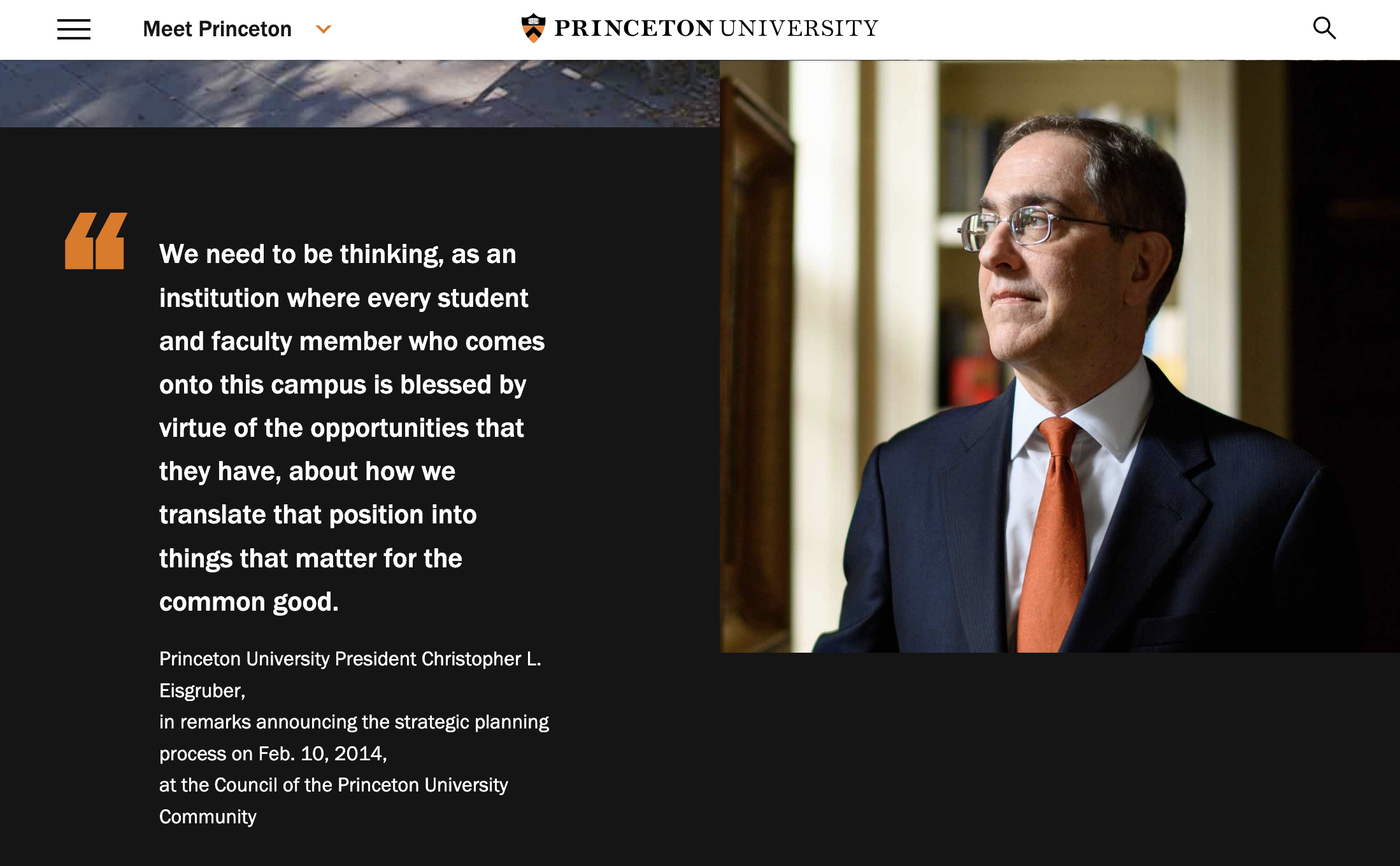
This ethos was articulated with notable precision by Princeton’s president, Christopher L. Eisgruber, in 2014:
“We need to be thinking, as an institution where every student and faculty member who comes onto this campus is blessed by virtue of the opportunities that they have, about how we translate that position into things that matter for the common good.”
The significance of this statement lies in its implicit theory of institutional responsibility. Privilege, in this view, is not a justification for insulation but a mandate for contribution. Excellence generates obligation; opportunity entails duty.
Princeton’s trajectory has, in turn, exerted meaningful pressure on peer institutions, particularly within the Ivy League and among leading U.S. private universities. This influence is observable in the subsequent expansion of grant-based aid, the reduction or elimination of student loans, and renewed institutional rhetoric around access and social mobility. The mechanism at work is not imitation alone, but competitive and normative convergence: when one elite institution aligns moral purpose with durable execution, it alters the benchmark against which others are judged.
At the same time, the higher education sector is undergoing structural transformation driven by artificial intelligence, platform-based learning, and corporate-led credentialing systems. By corporate universities, I refer not to traditional partnerships or executive education, but to firm-run educational and selection infrastructures that directly substitute for portions of university functions—particularly in talent identification, advanced training, and credential signaling. Programs such as meritocratic fellowships and internal academies developed by companies like Palantir Technologies exemplify this trend: they recruit, educate, and credential high-potential individuals outside the conventional degree framework.
These developments are not eliminating universities wholesale, but they are accelerating the unbundling of university functions. Instruction, assessment, signaling, and placement—once tightly integrated within the university—are increasingly being performed by alternative actors with greater speed and narrower specialization. In this environment, private universities that lack a credible and institutionalized commitment to affordability face growing legitimacy pressures. Absent such a commitment, their claim to serve the public good weakens, even as technological and corporate systems encroach on their traditional domains.
It is in this context that I propose the concept of the Princeton Effect. The term denotes more than the diffusion of a financial aid policy. It describes a deeper causal mechanism: when an elite institution aligns moral purpose, institutional design, and sustained execution, it reshapes the competitive equilibrium of an entire sector. Prestige ceases to be merely inherited; it becomes ethically productive. Leadership is no longer measured by exclusivity alone, but by the capacity to expand who belongs and who benefits.
The Princeton Effect, therefore, is not simply about Princeton. It is about the future of higher education itself—and about whether universities will remain civic institutions oriented toward humanity, or retreat into enclaves increasingly vulnerable to displacement by systems better attuned to access, scale, and social legitimacy.
Dr. Young D. Lee
Principal, NYET – New York Institute of Entrepreneurship and Technology®
New York, United States

 NYET - New York Institute of Entrepreneurship and Technology®